
%202.avif)

Does Wood Therapy Actually Work? Before-and-After Results Explained

If you've spent any time on social media lately, you've probably seen the wood therapy before-and-after photos: a therapist rolling carved wooden tools over someone's thighs, followed by a "flatter," "smoother," "more sculpted" reveal. It's dramatic, satisfying to watch, and everywhere right now. But dramatic content doesn't automatically mean dramatic results.
So does wood therapy actually work, or is it just clever marketing dressed up as a wellness treatment? This post is our honest, evidence-first attempt to answer that. We'll walk through what wood therapy claims to do, what's actually backed by science, what's still anecdotal, and what you can realistically expect if you book a session. If you're specifically curious about the session-by-session timeline and how results build over a treatment course, we cover that in detail in our Wood Therapy Before and After post.
What Wood Therapy Claims to Do
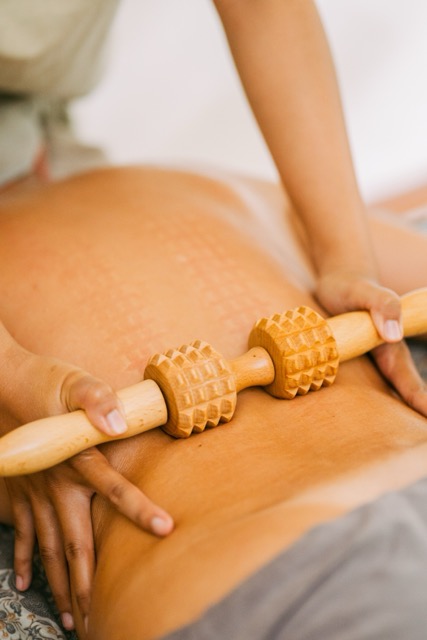
If you're new to the treatment, our guide to what wood therapy massage is covers the basics — but in short, it uses specially shaped wooden tools to massage and manipulate the skin and underlying tissue. Depending on where you read about it, proponents claim it can help with:
- Cellulite reduction and smoother-looking skin
- Body contouring and a more "sculpted" silhouette
- Lymphatic drainage and reduced fluid retention
- Toxin "release" from the body
- Inch loss around the waist, thighs, or arms
These are the claims you'll see repeated across spas, social media captions, and treatment menus. Before we evaluate any of them, it's worth being clear that this list is descriptive, not a verdict. Some of these claims rest on well-understood physiology; others are far shakier. That's what the next section is for.
What the Science Actually Says
Let's be direct about this: there is no robust, peer-reviewed clinical research or FDA approval confirming that wood therapy produces long-term cellulite reduction or permanent fat loss. That's not a reason to dismiss the treatment outright, but it is the honest starting point for this conversation.
It helps to separate two categories of claims.
Mechanisms that are reasonably well-documented in general massage and manual therapy literature:
- Improved local circulation from firm, targeted massage
- Temporary lymphatic drainage benefits, similar to those associated with manual lymphatic drainage massage more broadly
- Short-term reduction in fluid retention and puffiness in the treated area
- General relaxation and stress-reduction effects common to massage therapies
Claims that remain largely anecdotal:
- Permanent fat loss or fat cell destruction
- Guaranteed or long-lasting cellulite elimination
- Toxin "release" as a distinct physiological mechanism
The circulation and lymphatic effects are consistent with how manual massage generally works on the body. The fat-loss and toxin-release claims, on the other hand, are not something controlled clinical trials have established for wood therapy specifically. Most of the dramatic before-and-after results you see are self-reported by clients or documented by individual practitioners, not measured in controlled studies with a comparison group. That distinction matters: a self-reported "my legs look smoother" is real and worth something, but it isn't the same as clinical proof of fat reduction.
Myth vs. Fact
Here's a quick myth-vs-fact breakdown to cut through some of the noise:
So What Results Can You Realistically Expect?
Stripping away the hype, here's a grounded picture of what wood therapy tends to deliver:
- Smoother-looking skin texture and a temporary reduction in puffiness or water retention
- Modest, temporary changes in inch or circumference measurements — driven mainly by fluid shifts rather than fat loss
- Relaxation and improved circulation, similar to the feel-good effects of other massage therapies
- Cumulative results that build over a course of sessions, rather than a single dramatic transformation
If you want the detailed, week-by-week picture of how results typically progress across a full treatment course, our Wood Therapy Before and After post breaks down what to expect session by session.
Who Tends to See the Best Results
Not everyone walks away from wood therapy equally satisfied, and the difference usually comes down to expectations and habits rather than the treatment itself. People tend to get the most out of it when they:
- Use it as a complement to a healthy lifestyle — hydration, movement, and a balanced diet — rather than a standalone fix
- Go in with realistic expectations: skin toning, relaxation, and circulation benefits rather than dramatic, permanent fat loss
- Stay consistent. A single session can feel great, but it's the cumulative effect of regular sessions that produces the more noticeable, lasting changes
For a fuller rundown of what the treatment offers beyond body contouring, see Wood Therapy Massage Benefits and 7 Maderotherapy Benefits.
Our Take at Nomads Haus
We'd rather you trust us than be impressed by us for five minutes and then feel misled. So here's our honest position: we won't sell wood therapy to you as a miracle fat-loss treatment, because the evidence doesn't support that claim, and overpromising isn't how we want to earn your business.
What we will say is that wood therapy is a genuinely relaxing, non-invasive body treatment with real circulatory and lymphatic benefits, plus visible short-term improvements in skin texture and that "tighter" feeling many clients love. It works best as part of a broader wellness routine, not as a replacement for one. If that sounds like a treatment worth your time, we think you'll enjoy it. If you're expecting surgical-level fat loss, we'd rather tell you that now than after you've booked a package.
FAQs
Is there any scientific proof wood therapy reduces cellulite? No robust, controlled clinical studies currently confirm that wood therapy reduces cellulite in a lasting way. The circulation and lymphatic effects behind it are well understood from general massage research, but cellulite-specific, peer-reviewed evidence is limited.
Is wood therapy just a trend, or does it have real benefits? It's genuinely both. It's having a social media moment right now, but the underlying massage techniques have real, documented benefits for circulation, lymphatic flow, and relaxation — even if the more dramatic body-sculpting claims outpace the evidence.
How is wood therapy different from cavitation or laser body sculpting? Wood therapy is a manual, non-invasive massage technique. Cavitation and laser body sculpting use ultrasound or laser energy aimed at fat cells and are regulated as body-contouring devices with their own (separate) evidence base. They work through different mechanisms and generally aim for more targeted fat-reduction effects than massage alone.
Can wood therapy replace diet and exercise? No. It's best thought of as a complement to a healthy lifestyle, not a substitute for it. Clients who combine it with good hydration, movement, and diet tend to be happiest with their results.
Is it safe if there's limited research on it? For most healthy adults, wood therapy is considered a low-risk, non-invasive treatment. As with any body treatment, it's worth discussing your health history with your therapist beforehand, particularly if you're pregnant, have a circulatory condition, or have sensitive skin.
Ready to See for Yourself?
If you're still on the fence, that's a fair place to be — we'd rather you feel informed than sold to. The lowest-commitment way to find out if wood therapy is right for you is to book a single session before considering a full course. You can check pricing and options on our Treatments & Prices page, or head straight to Booking to reserve a session at our Ubud, Uluwatu, or Pererenan location.


%20Medium.jpeg)