
Massage in Ubud: How to Choose the Right Treatment and Studio

Quick Answer Ubud has hundreds of massage studios and most of their menus look identical. The right booking depends on what you want: traditional Balinese massage for general relaxation, deep tissue for muscle tension, reflexology for tired feet, or Madero therapy (wood therapy) for body sculpting and lymphatic drainage. What separates a good studio from a bad one is therapist training and hygiene — not price.
You have probably already walked past six massage places today. Three of them advertised the same treatments. One was a quarter of the price of the next.
Nomads Haus is Bali's only EMA-certified spa for Madero Therapy, and the questions we get most often in Ubud are not about our menu. They are about how to choose at all.
Why Ubud has so many massage options
Ubud is the wellness centre of an island that receives a very large number of visitors. Bali's provincial statistics office recorded 6,948,754 direct foreign tourist arrivals between January and December 2025, with Australia the largest single contributor.
That volume supports an enormous number of studios in a small town. It also means the same treatment names appear on every menu at wildly different prices, with wildly different levels of training behind them.
So the real problem is not learning what a massage is. It is working out which of the eight places on your street is the right one, and which treatment on the board actually does the thing you want.
The main types of massage you'll find in Ubud
Four treatment families cover almost every menu in town. They are not interchangeable, and they are not competing versions of the same thing.
Each one does a specific job. Booking the wrong one is the most common reason people walk out feeling like they wasted an hour. You can see how a full menu is usually structured on our full treatment menu.
Traditional Balinese massage
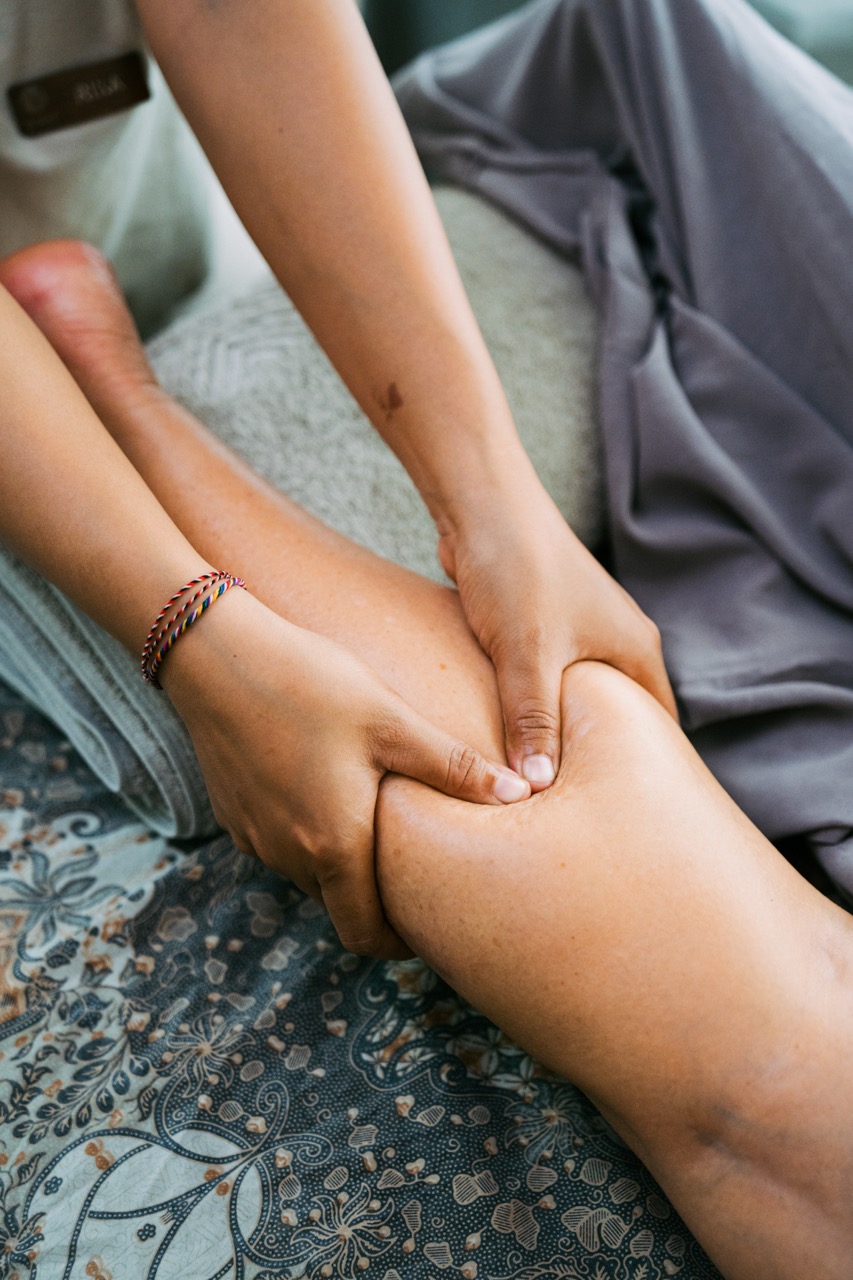
Balinese massage combines gentle stretching, acupressure and long oil strokes. The pressure is medium, and it covers the whole body.
It is the default choice for general relaxation and light muscle tension. It is also the treatment most likely to disappoint, for one reason: "Balinese massage" is not a protected term. The same words cover a therapist with years of training and one who started last week.
Deep tissue massage
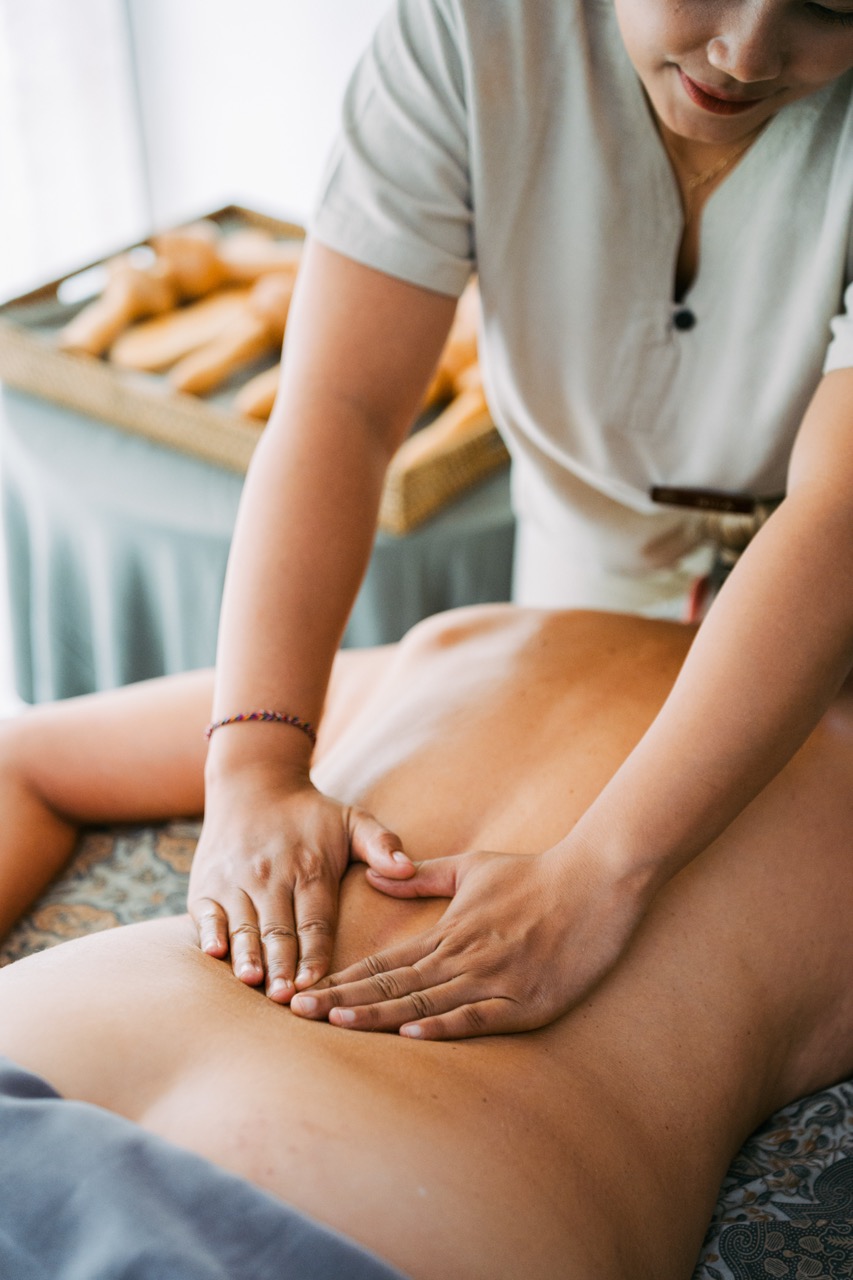
Deep tissue is slower and firmer. The therapist works into specific muscle groups rather than covering everything evenly.
Book it for knots and tension, not for relaxation. Firm should not mean painful — a good therapist checks pressure as they go and adjusts when you ask.
Reflexology and foot treatments
Reflexology applies pressure to points on the feet. Most Ubud menus also carry a simple foot massage or a foot scrub.
These are the shortest and lowest-commitment treatments on the board. They are worth knowing about after a day on Campuhan Ridge or the Tegallalang terraces.
Madero therapy (wood therapy)
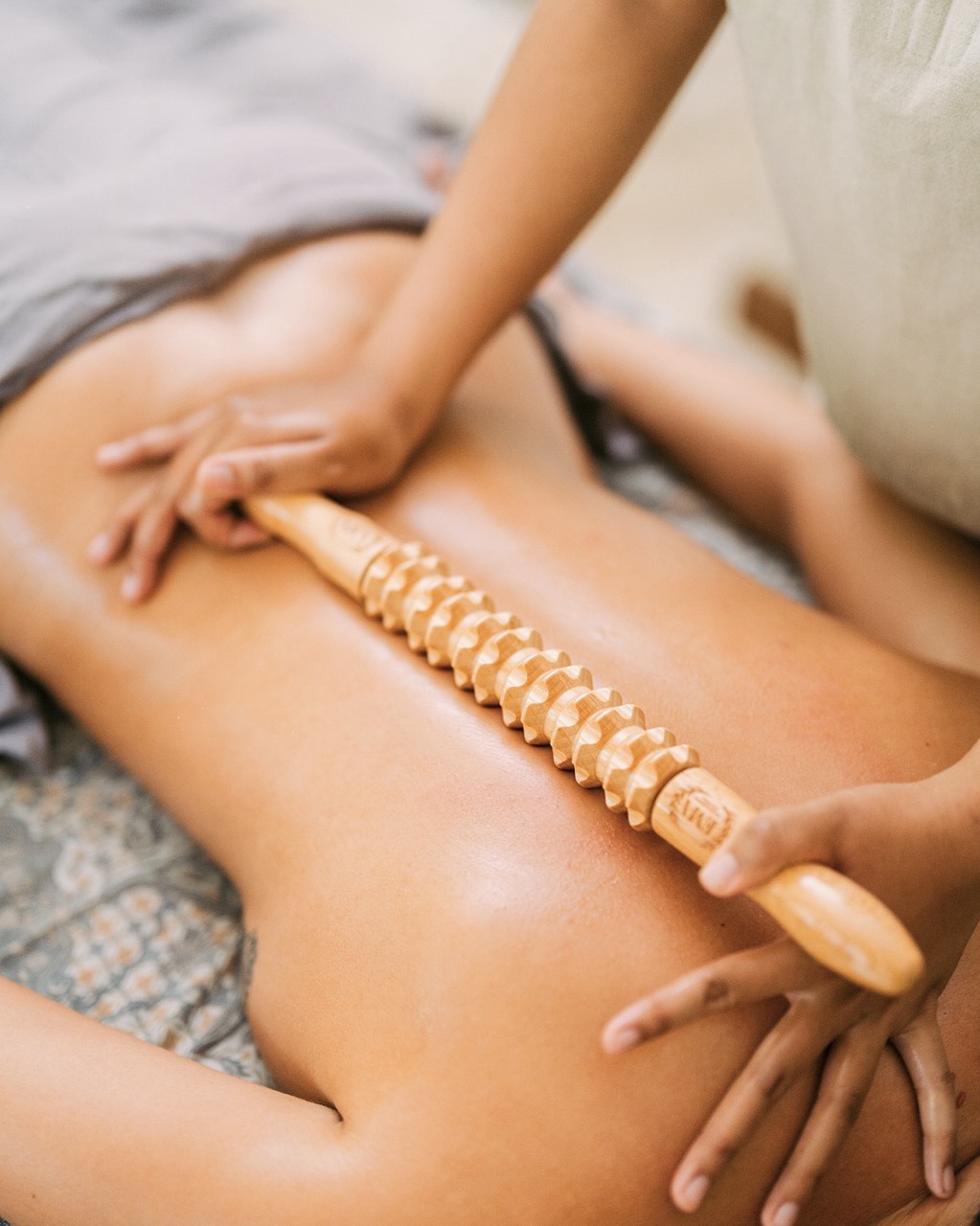
Madero therapy — also called maderotherapy or wood therapy — uses shaped wooden tools rather than hands alone. Rollers, sculpting boards and cupped tools are each matched to a body zone.
It is not a relaxation massage. It is a body-sculpting and lymphatic drainage treatment, and it feels firm and intense rather than soothing. It is non-invasive with no recovery time, so you can go straight back out afterwards. If the category is new to you, start with what wood therapy massage is.
Which one should you book?
Start from what you want, not from what sounds nicest on the menu.
If you want two of these things, book two sessions rather than asking one therapist to do both. They use different techniques and different pressure.
Madero body treatments in Ubud
Madero is the treatment Nomads Haus is built around. All of our therapists are certified and trained to the standards of the European Madero Association, the international governing body for the therapy — and we are Bali's only EMA-certified spa.
That certification matters because technique varies enormously in this category. Our Madero body treatments run from a 45-minute upper body session to a 150-minute face and body combination.
Many clients notice a difference after a single session. For lasting results we recommend five to six sessions, three to four days apart, with maintenance sessions after that — the session-by-session results timeline covers what changes and when.
Results vary from person to person, and we will always be honest about that. Madero alleviates pain associated with conditions like fibromyalgia and arthritis. It does not treat, cure or manage them, and no one should tell you otherwise.
That honesty is worth extending to massage in general. According to the US National Center for Complementary and Integrative Health, a 2015 review of 25 studies covering 3,096 participants found short-term improvements in pain after massage therapy, in both acute and chronic low-back pain.
"If you're in Ubud… this is the place to be." — Andrea M., Nomads Haus Ubud
Book a Madero session in Ubud →
How to tell a good Ubud studio from a bad one
Price tells you very little here, in either direction. A cheap room can be run by an excellent therapist and an expensive one can be run by a new hire.
These six signals tell you more:
- Certification - ask what the therapists are trained in and by whom. For Madero, you can check a therapist against EMA's certified therapist directory, which licenses Madero Therapists and publishes who holds a current certificate.
- Intake questions - a studio that doesn't ask about pregnancy, injuries or health conditions before a firm treatment is a studio that isn't thinking about your safety.
- Hygiene - fresh linen per client, clean tools, visible handwashing. Ask if you can't see it.
- Tools - for wood therapy specifically, the tools should be proper shaped instruments matched to body zones, not one general-purpose roller.
- Pressure honesty - a good therapist tells you in advance that a treatment will feel firm, and checks in during it.
- Price transparency - the full price, including any add-on, should be stated before you get on the table.
Our guide on how to vet a studio goes through the same checklist in more detail, including the red flags worth walking away from.
Who shouldn't book a Madero session
Madero is firm, hands-on work, and it isn't right for everyone. We publish our contraindications openly rather than leaving you to find out on the table.
Madero is not recommended if you are pregnant, at the start of your menstrual cycle, or if you have severe varicose veins, have had recent surgery, have an active fever, or have a cardiovascular condition.
If you are unsure whether a treatment suits your situation, ask your doctor first, then tell your therapist before the session starts. You can read more about how Madero Therapy works, including its safety notes, before you book.
Before and after your session
A little preparation makes a firm treatment more comfortable.
- Before - avoid a heavy meal in the one to two hours before your session, and remove piercings from any area being treated.
- After - drink plenty of water. Temporary redness, warmth, soreness or light bruising is normal and usually settles within about 24 hours.
Our Ubud spa is open Monday to Sunday, 11:00 to 20:00. Walk-ins are possible, but the longer treatments fill up first, so the 90-minute and 150-minute sessions are worth reserving ahead.
Travelling around Bali after Ubud? Nomads Haus also has spas in Uluwatu (Suluban and Padang) and Pererenan. Message the location you plan to visit to check which treatments it offers.
Message the Ubud team on WhatsApp →
Frequently asked questions
What is Balinese massage?
Balinese massage is a full-body treatment that combines gentle stretching, acupressure and long strokes with oil, usually at medium pressure. It is the most common treatment on Ubud menus and the usual choice for general relaxation.
Is Balinese massage painful?
It shouldn't be. Balinese massage sits at medium pressure, and any treatment that feels genuinely painful rather than firm is a signal to ask your therapist to ease off.
How much does a massage cost in Ubud?
Prices vary enormously across town and change over time, so it isn't useful to quote a figure — current rates for every Nomads Haus treatment are listed on our treatments page.
How many Madero sessions do I need?
Many clients notice a difference after one session, but we recommend five to six sessions spaced three to four days apart for lasting results, followed by maintenance sessions.
Do I need to book in advance?
Not always, but the 90-minute and longer treatments book out first, so reserving ahead is safer if you want a specific time or a specific treatment.
Related Reading
- Does wood therapy actually work? - an evidence-based look at what the treatment can and can't do.
- Wood therapy before and after - what visible change realistically looks like, and when.
- What to expect after a lymphatic drainage massage - the full after-care guide, including what's normal and what isn't.