

What Toxins Are Released After Massage? What's Actually Happening in Your Body

Quick Answer: No specific toxin has ever been identified as being released by a massage. What people usually mean by "toxins" is metabolic waste — ordinary byproducts your body makes and clears on its own, like lactate and carbon dioxide. Massage doesn't flush these out. What it does do is move blood and lymph, settle your nervous system, and change how your muscles feel. That's a smaller claim than detox, and it's the one the evidence supports.
You've probably heard it on the table. The therapist finishes, hands you a glass of water, and tells you to drink plenty tonight, because the massage released toxins.
It's the most repeated line in the industry. It's also the one nobody can name a substance for.
Our therapists are certified to the standards of the European Madero Association (EMA), and part of that training is being precise about what a treatment does and doesn't do. So here is the honest version of what happens in your body after a massage.
What people actually mean by "toxins"
A toxin, in the strict sense, is a poison produced by a living organism. Snake venom is a toxin. So are the compounds certain bacteria release. Your liver and kidneys deal with those.
In a spa, the word is used much more loosely. It becomes a catch-all for anything a person imagines is stuck in their muscles and shouldn't be.
The gap between those two meanings is where the confusion lives. The massage profession's own journal is direct about it: the detoxification myth proposes that through the pressure and manipulation of soft tissue during massage, toxins are squeezed from the muscles and released into the bloodstream, and there simply is no scientific evidence to support this idea.
Most of the time, what's being described isn't a toxin at all. It's metabolic waste — the normal leftovers of your cells doing their job.
- Lactate - produced when muscles work hard without enough oxygen. Your body clears it on its own, quickly.
- Carbon dioxide - carried by your blood to your lungs and breathed out. No massage required.
- Urea - a byproduct of breaking down protein, filtered out by your kidneys.
None of these are poisons. All of them are already being handled, continuously, whether or not you book a treatment.
What actually happens during and after a massage
Something real is happening on that table. It just isn't detoxification.
Three things change during a session, and each one explains part of how you feel afterwards.
Blood flow changes
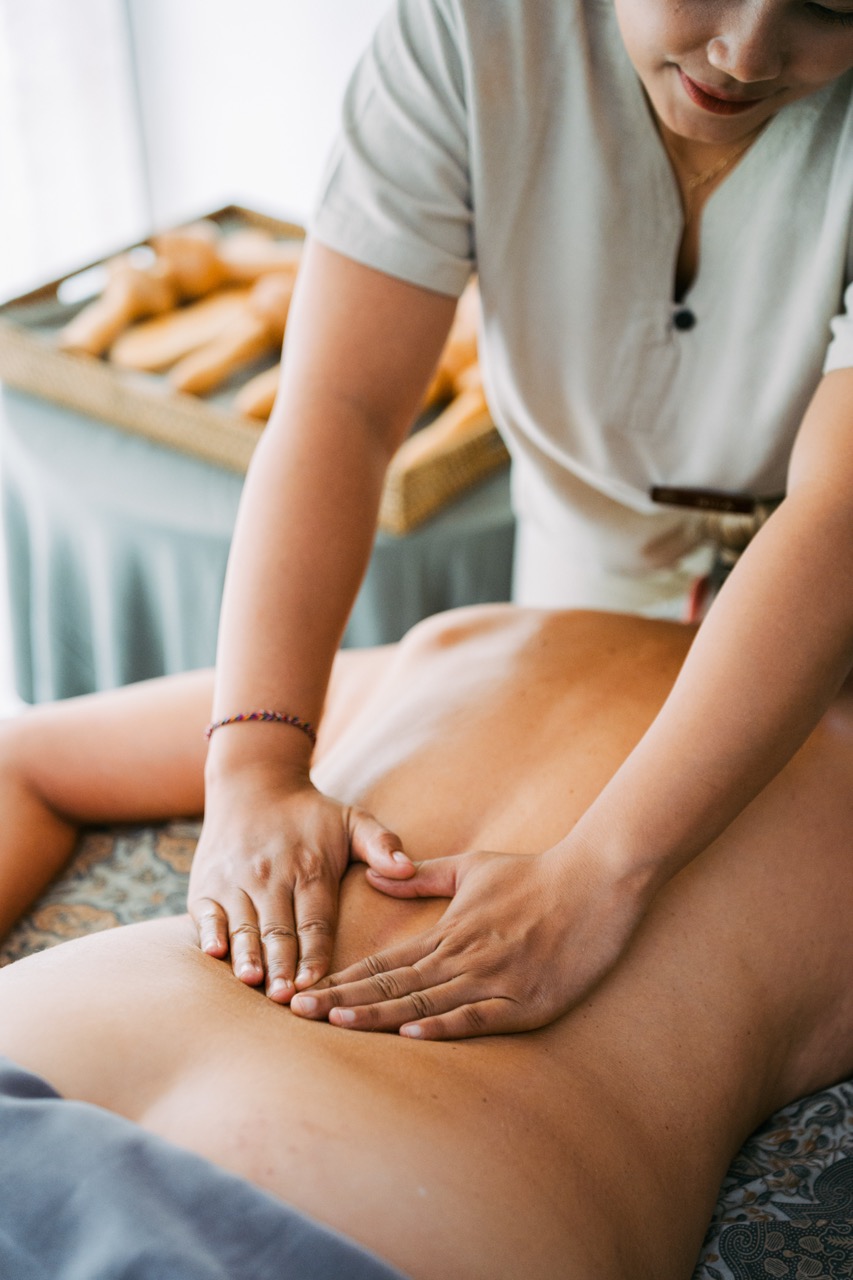
Pressure on tissue moves blood. Rolling, kneading and gliding strokes all push fluid through the area being worked, and circulation in that region shifts during and after the session.
This is part of why a treated area can feel warm, or look pink for a while. It's local blood flow, not a purge.
Your lymphatic system keeps doing its job
Your lymphatic system is a network of vessels that drains excess fluid out of your tissues and returns it to your bloodstream. It has no pump of its own. It runs on muscle movement, breathing, and external pressure, which is why manual technique can support it.
Madero technique is designed with this in mind. You can read how Madero Therapy works in full on our About page.
But supporting drainage and removing toxins are different claims. Drainage moves fluid that is already meant to move. It does not extract poisons that were never there.
Your nervous system settles
This is the part most people underestimate, and it may be the part you actually notice most.
Sustained, predictable touch shifts you out of a stress state and into a rested one. On the research side, the US National Center for Complementary and Integrative Health notes that research suggests massage therapy may help relieve several kinds of pain, but in most instances the evidence is not strong and massage may provide only short-term relief — and that the mechanisms by which massage therapy has its effects are unclear.
That's a modest finding, stated honestly. It's also a real one, and it doesn't need a detox story attached to it.
The lactic acid question
If you've been told a massage will flush lactic acid out of your muscles, this part is worth knowing.
Lactate doesn't linger. According to a 2026 review of massage and muscle repair, it is well known that lactic acid is cleared from muscles within minutes. By the time you're on a massage table the day after a hard workout, there is nothing left to flush.
When researchers tested the claim directly, the result went the other way. A 2010 study in Medicine & Science in Sports & Exercise found that massage impairs lactate and hydrogen ion removal from muscle after strenuous exercise by mechanically impeding blood flow.
And the soreness you feel a day or two after training isn't lactic acid either. It's DOMS — delayed onset muscle soreness — caused by tiny amounts of damage to muscle fibres and the inflammation that follows.
Massage may still help you feel better after a hard week. Just not by removing a substance.
Why you sometimes feel tired, achy or unwell afterwards
This is the experience sitting underneath the whole myth, and it deserves a straight answer, because it's real.
People often describe feeling drained, headachy, or slightly flu-like after a deep session. Having been told that toxins were released, they reasonably read those feelings as detox symptoms.
There are simpler explanations, and usually more than one applies at once.
- Deep work is work. Firm pressure on muscle tissue creates a mild inflammatory response, much as exercise does. Tenderness for a day is ordinary.
- You dropped into deep rest. Coming out of ninety minutes of deep relaxation can feel like waking from a nap. Tiredness afterwards is common.
- You were already dehydrated, or hadn't eaten. Lying still for an hour and a half makes that obvious in a way a busy afternoon doesn't.
- The pressure went too deep, too fast. Madero should feel firm and intense rather than painful. If it crossed that line, say so — pressure is adjustable, and your therapist would rather know during the session than after it.
Temporary redness, warmth, soreness or light bruising after a Madero session is normal and usually settles within about 24 hours. If something still feels wrong beyond that, that's worth a conversation with a professional rather than a detox explanation.
We go through that first day in more detail in our guide to what to expect after lymphatic drainage massage.
So why do therapists hand you water?
Because hydration is good for you. That's the whole reason, and it's enough of one.
Water supports circulation, digestion, joint comfort and concentration. Drinking a glass after a treatment is sensible, and we'll keep offering it.
What it doesn't do is flush a toxin load that the massage created, because no such load was created. The advice is sound. The usual explanation for it isn't.
What Madero Body treatments are actually for
If detox isn't the point, what is?
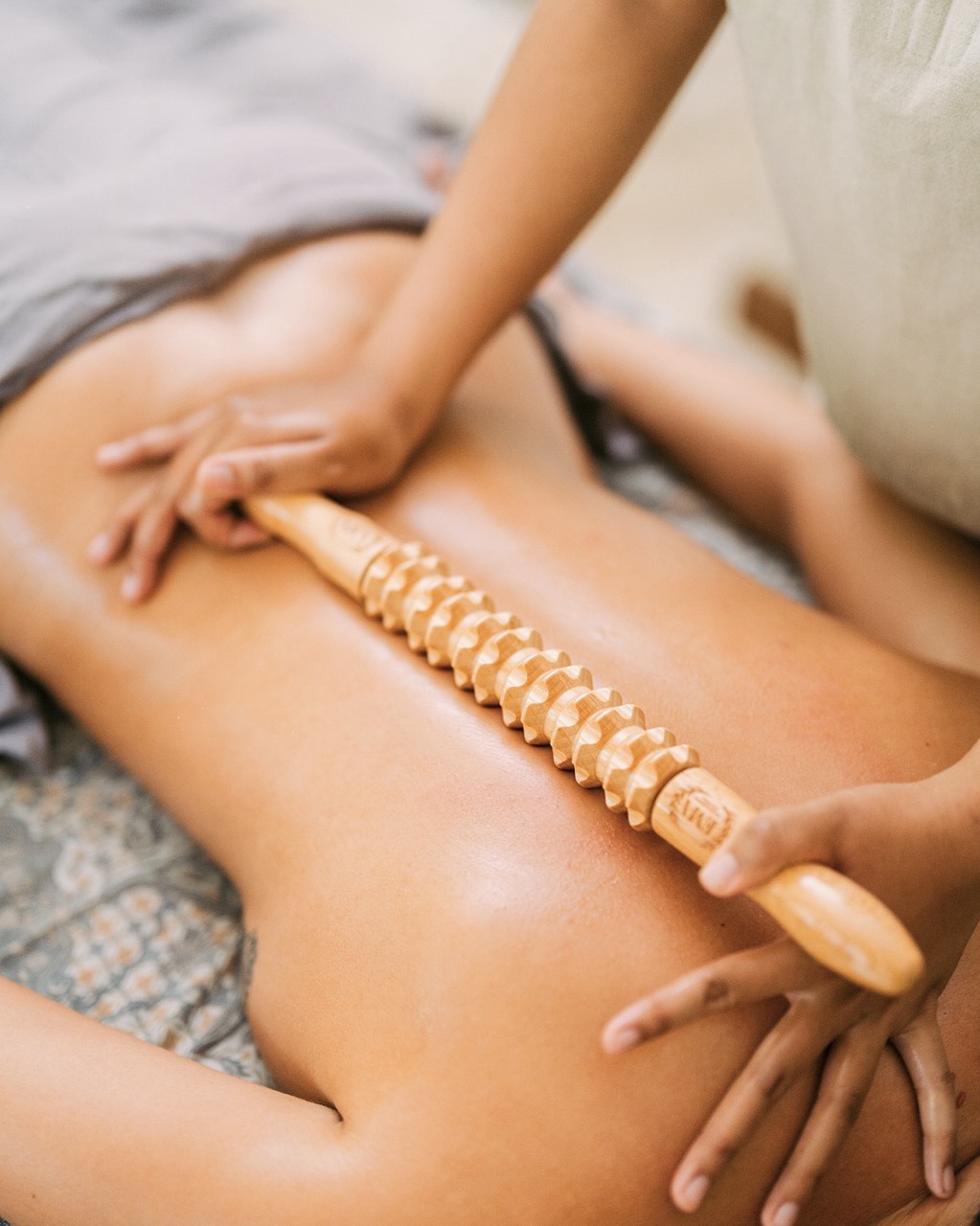
Madero Therapy — also called maderotherapy, or wood therapy massage — uses shaped wooden tools, including rollers, sculpting boards and cupped tools, to apply firm rhythmic pressure across the body. Each tool is matched to a body zone.
Our Madero Body menu is built around contouring, circulation and muscular release. Not cleansing.
Current durations and pricing sit on our Madero body treatments page.
Results are honest rather than instant. Many clients notice a difference after a single session, but five to six sessions, spaced three to four days apart, is what we recommend for lasting change. Results vary from person to person, and we'll always be straight with you about that.
Ready to start? Book a Madero session →
Who should wait
Madero is non-invasive and needs no recovery time, but it isn't right for everyone. Your therapist will ask before a first session.
Hold off, or check with your doctor first, if you are:
- Pregnant, or at the start of your menstrual cycle
- Living with severe varicose veins
- Recovering from recent surgery
- Running an active fever
- Managing a cardiovascular condition
One more distinction, stated plainly: Madero can alleviate pain associated with conditions like fibromyalgia and arthritis. It does not treat, cure or manage them, and we won't tell you otherwise.
Frequently asked questions
What are the symptoms of detoxing after a massage?
There is no detox process to have symptoms from. The tiredness, mild soreness or headache people describe are ordinary responses to deep pressure and deep relaxation.
Does deep tissue massage release more toxins than a lighter massage?
No. Deeper pressure creates more temporary soreness, but it doesn't release toxins, because no massage does.
Do I need to drink water after a massage?
Drinking water is a good idea for your general health, just not because a massage created a toxin load that needs flushing.
Does wood therapy help lymphatic drainage?
Madero technique applies the pressure and movement that support your lymphatic system's normal work, which is moving fluid — not removing poisons.
Why am I sore two days after a massage?
That's most likely delayed onset muscle soreness from small amounts of damage in the tissue, the same mechanism that makes you ache after a hard workout.
Related Reading
- What wood therapy can and can't do - an evidence-based look at the results people actually see
- Full treatment menu - every treatment, with durations and current pricing